Supplier shortlist
| Decision point |
Evidence or question |
| Supplier shortlist: Equipment scope |
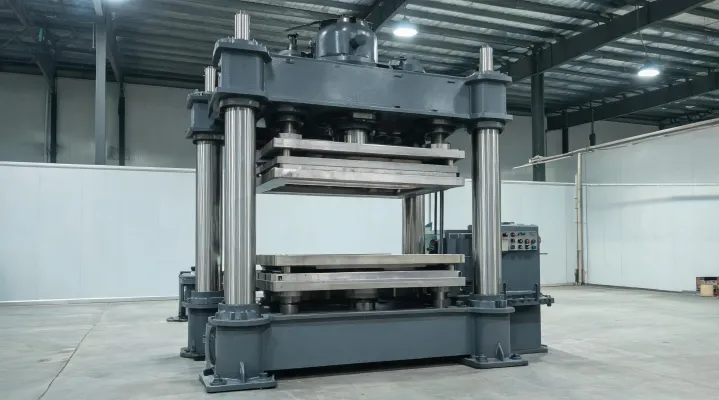
Ask each column type rubber vulcanizing press suppliers group to restate column spacing, platen size, daylight, ram stroke and how the mold is loaded between columns. A shortlist that only names company size is not comparable. Work envelope is remaining aisle around the columns, not a catalog drawing without the buyer mold. Throughput-style parts per hour without compound, dwell and duty cycle are incomplete. |
| Price exclusions |
Flag molds, vacuum boxes, cooling circuits, installation, shipping, training, commissioning and SAT travel when they are absent. Tooling and heaters are often extra. Those gaps are comparison items, not hidden discounts. Connected load in kW and three-phase supply must be restated if heaters and hydraulics are quoted. |
| Response basis |
A usable factory response restates platen uniformity with the actual mold, pressure-holding method and included documents. This service does not sign FAT or SAT. Owner acceptance remains with the buyer after contract language is written. |
Remaining buyer inputs include PLC interface names, cooling water, compressed air demand, footprint, optional budget (currency, per-unit or whole-order) and supplier preference (premium, mid-range, budget-friendly, or not sure). Preference is a buyer selection, not a verified factory rating.
Single-press quotes and integrated-line quotes should not share one total unless interfaces, staffing and acceptance boundaries are named. Nominal heater temperature and validated cure inside a loaded mold are different numbers; request test conditions. Machine price and installed project cost are also different: tooling, shipping, utilities, installation and spare parts should sit on separate lines. Cycle time after changeover is a maintenance fact, not an implied free option.
A laboratory press catalog dated for 2025 is used only as a field checklist for platen and daylight questions. It is not a universal rating and not an affiliation. Production references that mention adjustable exhaust steps and pressure replenishment are more relevant to curing than a laboratory hot-press capacity alone. Feedstock is the rubber compound. Positioning of the mold is confirmed on a drawing, not inferred from a photograph. Working pressure applies to the hydraulic circuit and must not be treated as total clamp force without ram area.
Read press supply versus process development before treating a process recipe as included hardware. Column-type access differs from a closed frame plate; ask the factory which layout they are quoting rather than assuming both names describe one machine.